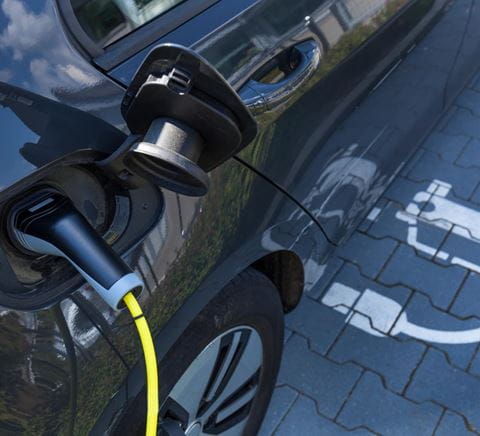


Electric vehicles
Supporting your transition to EVs
Whether you are currently driving an electric car, or considering switching to an one, there are a whole host of benefits and other things to consider in the maintenance of the vehicle. Read on to find out how to get the most out of your EV once you have switched.
Are you ready to switch to an electric vehicle?



Optimising battery life
The lifespan of your BEV’s battery depends on mileage and care, but you can help preserve it by:
- Keeping charge levels between 20% and 80%
- Limiting rapid charger use, which harms battery life
- Parking in cool, shaded areas or a garage on hot days to prevent overheating and damage
- Avoiding aggressive acceleration to reduce battery wear
Types of charging connectors
- Type 1
Type 1 connectors have five pins and are mainly used in North America, while Type 2 connectors are more common in the UK. However, some older BEVs use the Type 1 connector.
Type 1 connectors support only AC (Alternating Current) slow and fast charging and are not suitable for rapid charging. If your BEV has a Type 1 connector, you can use an adapter to charge at untethered public charging points, which do not have a permanently attached cable.
- Type 2
Type 2 connectors have seven pins and are the most common connector used in Europe and can be locked to the BEV during charging.
They are suitable for slow and fast charging, but can sometimes be used for rapid charging, subject to your BEV's compatibility.
- CHAdeMO connector
Developed in Japan, CHAdeMO stands for ‘Charge de Move’ and was among the first DC rapid charging systems, though CCS connectors are more common in Europe
CHAdeMO uses two connection points: one for slow/fast charging with Type 1 or Type 2, and one for rapid charging.
- Combined Combination System (CCS)
CCS connectors combine either a Type 1 or Type 2 connector with a two-pin DC (Direct Current) connector and are the most common type of connector used for DC rapid charging. The majority of new BEVs are fitted with CCS connectors, allowing you to charge your BEV at both public rapid charging points and a home AC charging point.
- Domestic connectors
The majority of BEVs can be charged using a standard domestic three-pin connector, however this type of charging is only recommended for emergency use.